
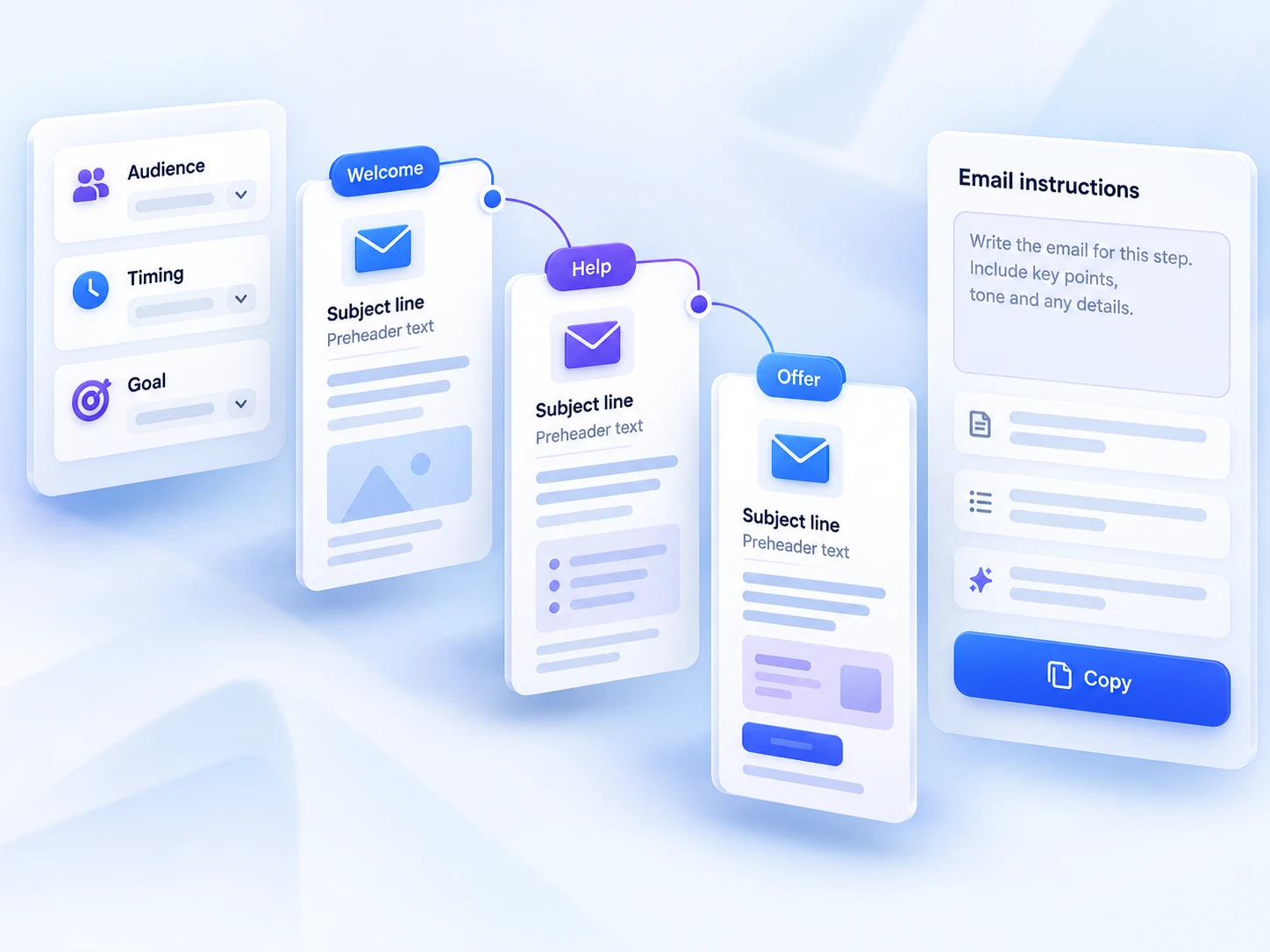
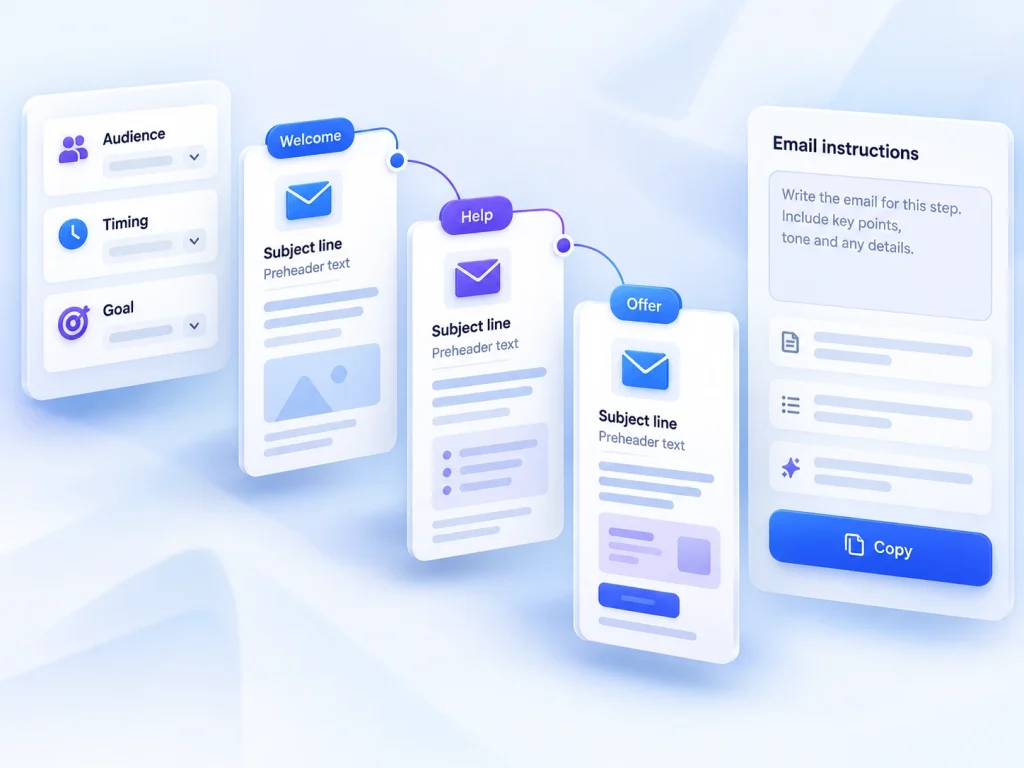
Plan your newsletter around an edition you can produce during an ordinary busy week, not your most inspired afternoon. Start with one reader need, a fixed writing window and a small repeatable format. Then outline four editions before committing to a schedule. This gives you a useful way to test whether the newsletter deserves space in your business without creating an open-ended publishing obligation.
Define a reader promise you can fulfil repeatedly
A topic is not yet a newsletter plan. “Design” or “running a small business” leaves you deciding what belongs in every edition. A reader promise narrows that choice: who the email helps, which recurring problem it addresses and what someone can do after reading. Keep the promise useful enough to matter but small enough to fulfil without extensive research every time.
Example: a freelance designer serving independent shops could promise, “One useful way to make your next promotional graphic more focused.” That supports editions about choosing a focal point, shortening a headline or checking readability. It does not require a comprehensive design lesson. The trade-off is narrower coverage, but that boundary makes both writing and subscribing a more deliberate decision.
Set a production budget before choosing frequency
Choose a block of time you can genuinely protect, including planning, drafting, checking and sending. If you can spare an hour every fortnight, design an edition that fits that hour. Avoid treating writing as the whole job: finding an example, checking a destination link and reviewing the email preview also need space.
Example: divide a one-hour session into 10 minutes to choose the point, 25 to draft, 15 to edit and 10 for final checks. These are planning allowances, not a productivity standard. If the draft regularly consumes the whole session, shorten the format or publish less often. A weekly schedule offers more frequent contact, but also creates more deadlines; a monthly schedule leaves longer gaps between messages.
Use an outline that limits decisions
A repeatable outline should reduce preparation, not force every idea into an awkward template. Begin with three parts: the reader’s immediate problem, one explanation or example, and one next action. Add a short introduction only when it supplies necessary context. Multiple regular sections can feel substantial, but each becomes another item to source and maintain.
- Problem: name a situation the reader can recognise without a long introduction.
- Useful detail: explain one decision, show an explicitly labelled example or answer one question.
- Next action: suggest a manageable task, a relevant reply or an appropriate offer.
Example: the designer’s edition might address a crowded sale graphic, explain how to select one main message and invite the reader to remove a competing headline. A service link could be relevant, but it should not displace the promised advice. You do not need both a reply request and a sales invitation in every edition.
Plan four editions from material you already understand
Look through recurring enquiries, your own working notes and questions you can answer responsibly. Record each candidate as a reader question rather than a broad theme. Beside it, note the main answer, the example you could use and anything that needs checking. Remove client details and seek permission before using identifiable work or correspondence.
Choose four questions that serve the same reader promise without repeating the same advice. If you cannot outline four, investigate why: perhaps the promise is too narrow, your material requires too much research or you need more reader input. Four outlines are a planning test, not proof that you have an endless supply of worthwhile topics.
Run a small trial before expanding
Draft the first edition within your chosen time budget before announcing a new schedule. Verify factual claims, links, permissions and whether the next action matches the subject line. After each of the first four editions, note what took longer than expected and whether readers raised useful follow-up questions. Replies can inform your judgement, but silence alone does not establish that an edition was unhelpful.
Keep, simplify or pause the format based on that workload and the relevance of the material still available. Start here: write one reader promise, reserve one production session and outline four questions. Do that before choosing extra sections or promising a faster cadence.